Choosing the Right Welding Technique for Your Project
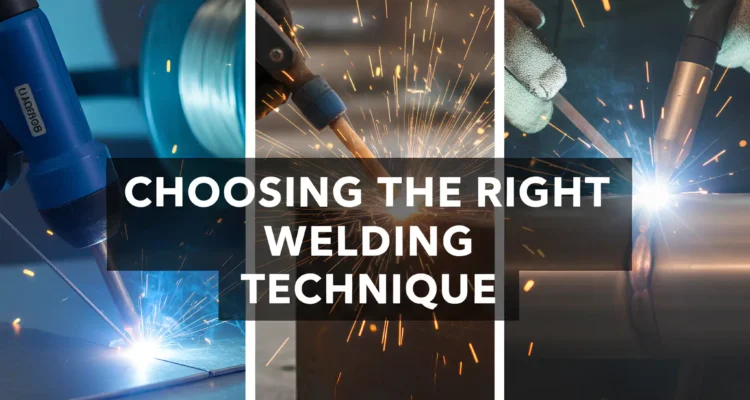
Whether you’re a seasoned fabricator or just striking your first arc, selecting the right method is the foundation of a successful build. In the world of welding, three giants dominate the field: MIG, Stick, and TIG. Each has a specific “personality” and ideal application. Here is how to tell them apart and choose the winner for your next project.
Also known as Gas Metal Arc Welding (GMAW)
MIG is often called the “hot glue gun” of the welding world. It uses a motor to feed a wire electrode through a gun, while a shielding gas (Argon/CO2) protects the weld from the air. It is fast, clean, and easy to learn.
• Best For:
Also known as Shielded Metal Arc Welding (SMAW)
The old-school heavyweight. Stick welding uses a flux-coated consumable “stick” electrode. As the flux melts, it creates its own shielding gas. It’s rugged, powerful, and requires no gas tanks.
• Best For:
Also known as Gas Tungsten Arc Welding (GTAW)
TIG is the surgeon’s tool of welding. It requires a non-consumable tungsten electrode and a separate filler rod fed by hand. It offers the highest level of control and the cleanest results.
• Best For:
By understanding these strengths, you can match the tool to the task. Whether you prioritize the speed of MIG, the ruggedness of Stick, or the surgical precision of TIG, there is a method ready to bring your project to life.