
A customer brought in a trailer axle with a bent spindle. Instead of replacing the entire axle, we cut the damaged spindle off and welded on a new one. Here’s what the job looks like and why getting the details right matters.
How Trailer Spindles Get Bent
It doesn’t take much. A hard curb hit while the trailer is loaded, a pothole at the wrong angle, overloading the trailer past its axle rating, or even a bearing failure that goes unnoticed long enough. The spindle is the part of the axle that the hub and wheel bearings ride on, and it sticks out from the end of the axle tube. It’s strong, but it’s also exposed. Once it takes a hit at the right angle, it bends.
The first sign is usually uneven tire wear. The inside edge of one tire wears down way faster than the other side, or faster than the tire on the opposite end of the axle. Sometimes you can see it just by looking down the axle from one end. The wheel won’t sit straight. If you put a level on the hub face, it’ll be off.
Once the spindle is bent, you’ve got three options: try to straighten it, replace just the spindle, or replace the whole axle. The first option is a bad idea for reasons we’ll get into. The second is what we did on this job. The third makes sense sometimes, but not always.
Why You Don’t Try to Straighten a Bent Spindle
We see this advice on forums all the time. “Just heat it up and bend it back.” Or “use a cheater bar on the spindle and muscle it straight.” This is a bad plan.
If you apply enough heat to bend the spindle back into position, you’ve changed the metal’s properties. You’ve killed the temper. It will bend again much easier the next time it takes any stress. And if you cold-bend it (force it back without heat), you’ve introduced stress fractures that you can’t see. Either way, you now have a spindle that the hub, bearings, and wheel are riding on that is structurally compromised. That’s the part that keeps the wheel attached to the trailer at highway speed.
The right fix is to cut off the damaged spindle and weld on a new one. Or, if the axle tube is also damaged, replace the whole axle. But if the tube is straight and in good shape, there’s no reason to throw the whole thing away over one bent spindle.
What This Job Looked Like
A residential customer brought this axle into our Flint shop with a bent spindle. You could see the bend pretty clearly just holding it. The axle tube itself was fine, straight and undamaged. So rather than buying a whole new axle, we replaced just the spindle. Dennis picked up a new spindle from a trailer parts supplier and the job was done same day.
Here’s the process, step by step.
Step 1: Inspect and remove the damaged spindle
First thing is confirming the axle tube is worth saving. If it’s bent, rusted through, or otherwise compromised, you’re better off starting fresh with a new axle. In this case the tube was solid, so we moved forward with just the spindle replacement.
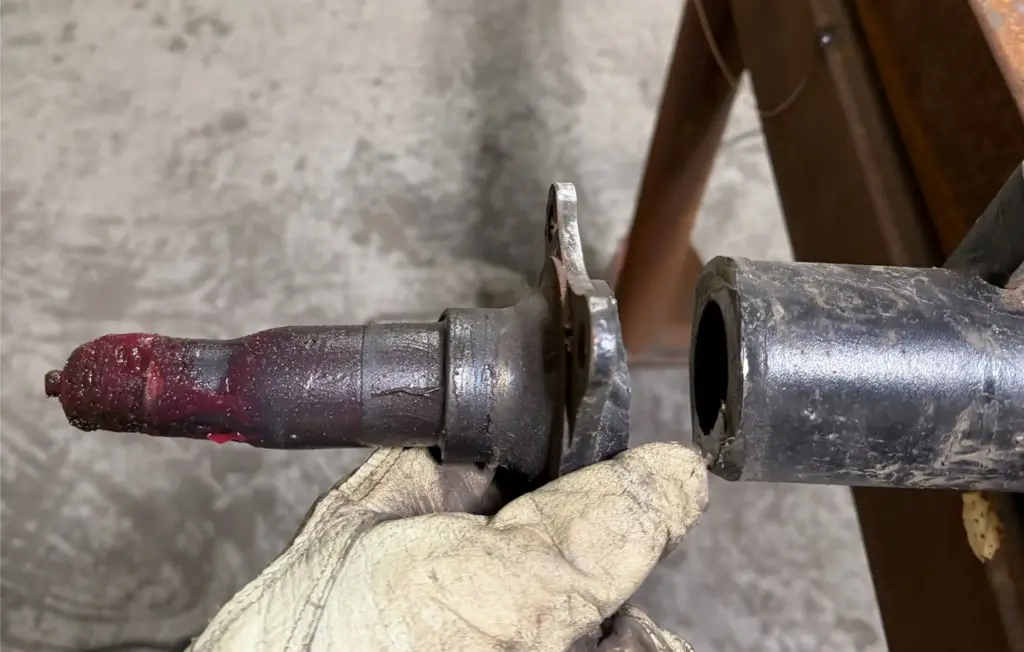
We cut the bent spindle off with a cut-off wheel. The critical thing here is making sure you don’t shorten the axle tube in the process. The tube length has to stay exactly the same or your wheel track width changes, and that creates a whole different set of problems. You cut at the spindle, not into the tube.
Step 2: Prep the axle tube for welding
After the old spindle is off, we grind the end of the axle tube clean. You have to remove all the remaining material from the old spindle weld without grinding into the tube itself. If you take too much off, you’ve shortened the axle and now your wheel track is off. If you don’t take enough off, the new spindle won’t seat flush and you’ll have a gap in the joint that weakens the weld. It’s a feel thing as much as a measurement thing.
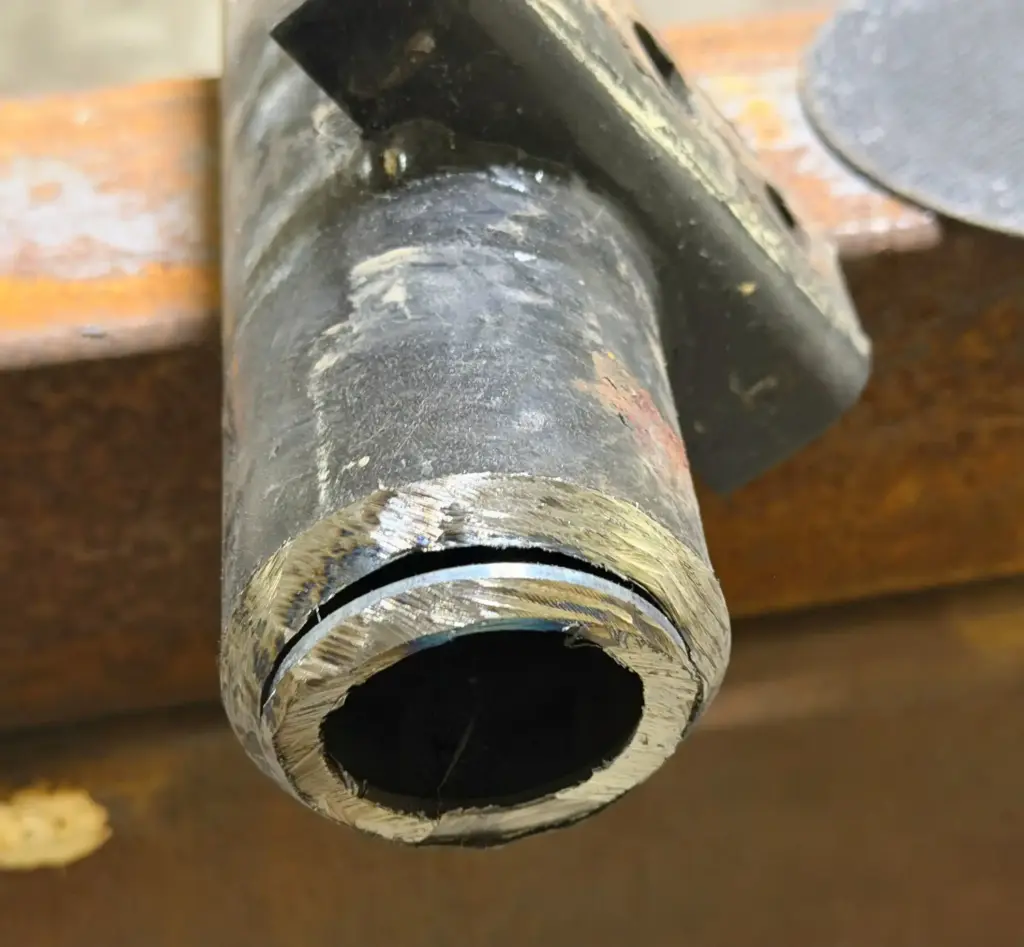
Once the tube end is clean, we bevel the edge with a grinder. The bevel matters more than most people realize. A flat butt joint between the tube and the new spindle might look fine, but it won’t hold up to what a trailer axle actually goes through. Every bump, pothole, and lane change puts dynamic load and vibration through that joint. A flat surface only lets the weld fuse to the face of the metal. A proper bevel opens the joint up so the weld material can penetrate deeper into the base metal on both sides. That’s what gives the joint real strength, not just surface adhesion but full fusion through the thickness of the tube wall. You can see in the photo that the bevel creates a clean V-shaped channel all the way around the tube. That’s where the weld is going to sit, and it’s why this repair holds up under load instead of cracking six months later.
Step 3: Square the new spindle and weld it
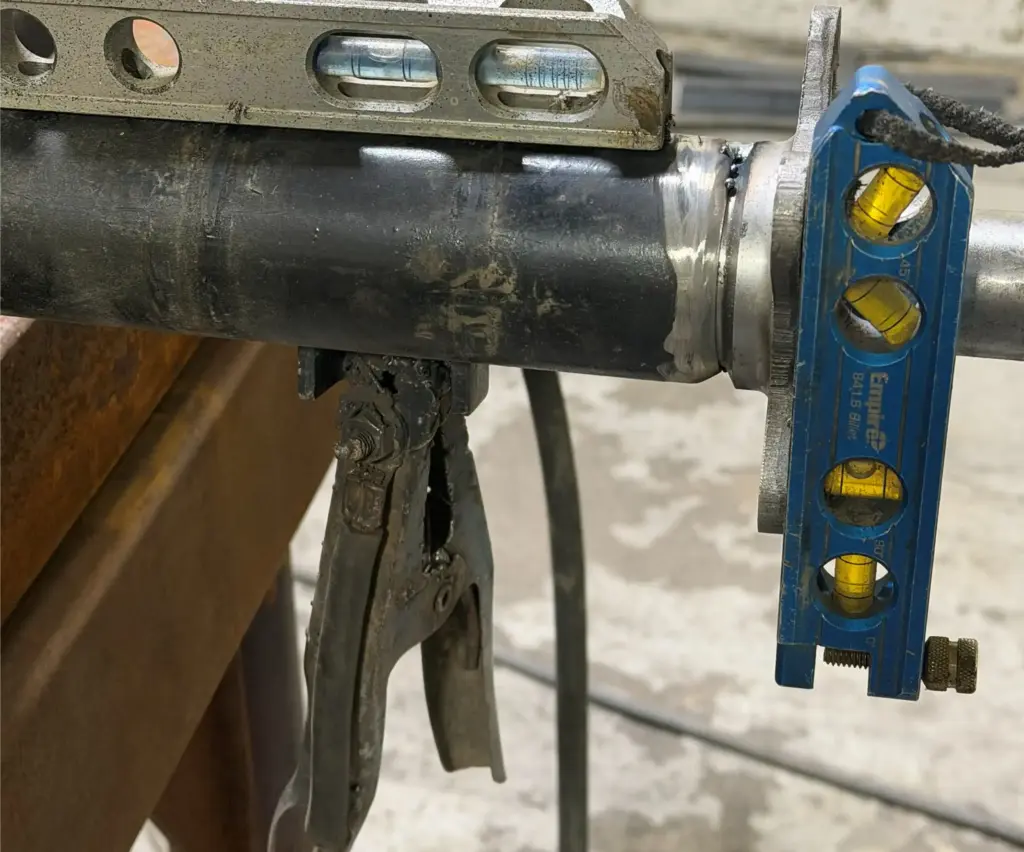
This is the step that separates a proper repair from a hack job. The new spindle has to be perfectly square to the axle tube. If it’s off by even a small amount, you’ll get uneven tire wear, the trailer will track to one side, and the bearings will wear out prematurely because they’re carrying load at an angle they weren’t designed for.
We use levels and squares to check the spindle alignment on multiple planes before any welding happens. Once it’s confirmed straight and true, we tack it in place and check again. Then we MIG weld the full circumference of the joint. After welding, we check alignment one more time to make sure nothing shifted from the heat of the weld.
Etrailer’s technical reference puts it pretty clearly: spindle replacement is not a DIY job. The spindle must be absolutely square with the axle or you’ll get premature tire wear and wheel tracking problems. This is a job for a welder who’s experienced with trailer axle work and has the precision tools to verify alignment.
Step 4: Customer installs the axle back on the trailer
Once the weld was done and cooled, the customer took the axle home and reinstalled it on the trailer himself. Total turnaround on the spindle replacement was one day.
When to Replace the Spindle vs. the Whole Axle
There’s a lot of debate about this in trailer forums. Some people say always replace the whole axle. Others say cut and weld. Here’s how we think about it:
Replace just the spindle when:
- The axle tube is straight and in good condition
- The bend is clearly isolated to the spindle
- You have access to a shop with certified welders and precision alignment tools
- The axle is a custom length or configuration that’s hard to match off the shelf
Replace the whole axle when:
- The tube itself is bent, cracked, or has significant rust
- Both spindles are damaged
- You want to upgrade capacity while you’re at it (moving from a 3,500 lb to a 5,200 lb axle, for example)
- A standard replacement axle is available off the shelf and the cost difference is small
Neither answer is always right. It depends on what the axle looks like, what the customer needs, and what makes sense for the money. We look at the whole picture and give you an honest answer on which route to go.
Signs Your Trailer Spindle Might Be Bent
Bent spindles don’t always announce themselves. Sometimes the trailer still pulls straight and the problem only shows up in tire wear over a few hundred miles. Here’s what to watch for:
- Uneven tire wear on one side. If the inside or outside edge of one tire is wearing significantly faster than the opposite tire on the same axle, the spindle could be off.
- The wheel doesn’t sit vertical. Stand behind the trailer and eyeball the wheels. If one is leaning in or out compared to the other, something is wrong. A level held against the hub face will confirm it.
- The trailer pulls to one side. If the axle tube is straight but the spindle isn’t, the wheel on the bent side is effectively steering the trailer slightly off course.
- You hit something. If the trailer clipped a curb, dropped into a ditch, or took a hard impact, check the spindles even if everything looks fine at first glance. The wear pattern will show up on the tires over the next few trips.
If you’re not sure, bring the trailer in and we’ll put eyes on it. It takes about five minutes to check spindle alignment and it can save you from chewing through a set of tires or dealing with a bearing failure caused by an angled load.
Frequently Asked Questions About Trailer Spindle Repair
A bent spindle should not be straightened. Heating it and bending it back weakens the metal, and it’ll bend again much easier the next time it takes any load. Cold bending introduces stress fractures you can’t see. The correct repair is to cut the damaged spindle off completely and weld a new one onto the existing axle tube. This needs to be done by a welder who is experienced with trailer axle work and has the tools to verify alignment.
Not necessarily. If the axle tube itself is straight and in good shape, a qualified shop can cut off the bent spindle and weld on a new one. That saves you the cost of a full axle replacement. However, if the tube is also bent, cracked, or rusted out, then yes, the whole axle should be replaced. A good shop will check the tube first and give you an honest recommendation.
A replacement spindle itself is pretty affordable, usually somewhere between $25 and $60 depending on the size and rating. The labor is where the real work is: cutting, grinding, beveling the tube, aligning the new spindle with precision tools, and welding it. The total is generally well under what you’d pay for a complete new axle with installation. For a specific quote, just give us a call or bring the axle by the shop.
The most common sign is uneven tire wear on one side of the trailer, especially on the inner or outer edge of just one tire. You might also notice the trailer pulling to one side, or you can visually see that one wheel is leaning in or out when you look at it from behind. Putting a level against the hub face is the quickest way to confirm it. If you’re not sure, any decent trailer shop can check it in a few minutes.
Trailer Axle and Spindle Repair in Flint, MI
Iron Mann Industries is a metal fabrication and certified welding shop with a full trailer service center in Flint, MI. We handle spindle replacements, axle swaps, frame repairs, bearing service, brake work, and custom trailer builds. If your trailer has a problem, bring it by or give us a call. We’ll take a look and tell you what’s going on.
We also offer free trailer inspections if you just want a professional set of eyes on your rig before towing season.
Get a quote or call (810) 407-7585. We’re at 2110 Lapeer Road in Flint, serving Genesee County and all of Mid-Michigan.