
Michigan requires every trailer on public roads to be registered with the Secretary of State, and trailers over 2,500 lbs also need a title. Once you are on the road, the rules cover lighting, brakes (required on trailers with a gross weight over 3,000 lbs), safety chains, license plate placement, and load securement. If you tow in Michigan, here is what the law actually requires and what shop owners across Flint, Lapeer, Owosso, Fenton, Linden, and the rest of Mid-Michigan ask us about most often. For repairs or a free trailer safety inspection, see our Trailer Center.
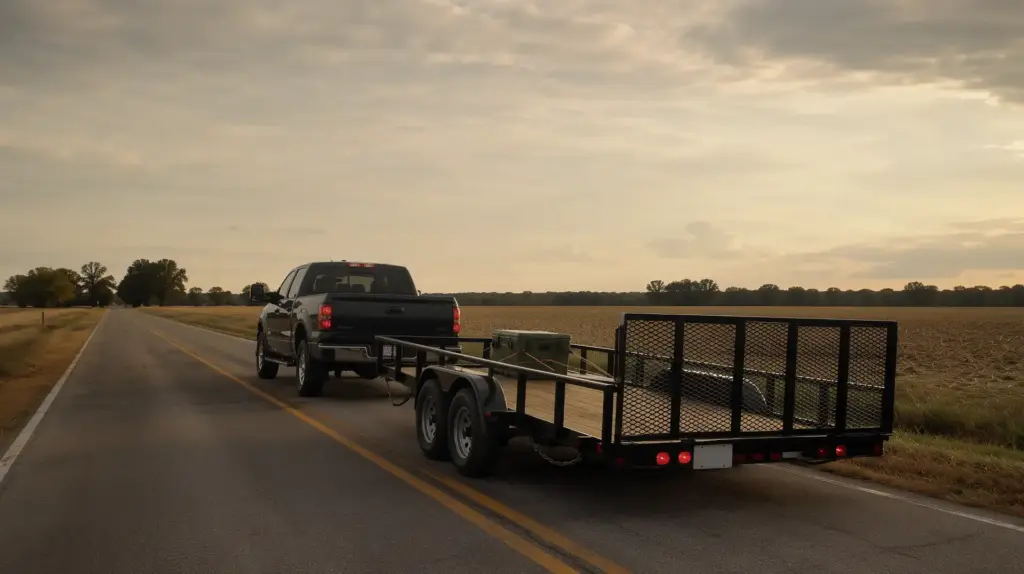
Most trailer owners learn Michigan’s trailer laws the hard way: pulled over on the shoulder, talking to a State Trooper, finding out the rear running light has been out for a thousand miles or the safety chains are too short. The laws are not complicated, but they are easy to forget about between hauls. This is the plain-English version of what Michigan requires, what the penalties look like, and what we see come into our shop in Flint after someone gets a citation or, worse, has something fail on the highway.
If you own a trailer in Michigan, whether it is a boat trailer that sits all winter, a contractor’s work trailer running every day, or a utility trailer that comes out three weekends a year, the rules apply to you. Same goes for landscapers, apartment maintenance crews, and small fleet operators who depend on a trailer to make a living.
Michigan trailer rules at a glance
- All trailers must be registered with the Michigan SOS, with very limited exceptions.
- Trailers over 2,500 lbs gross weight also require a title.
- Michigan uses permanent trailer registration for many trailer classes, a one-time fee instead of an annual renewal, established by 2013 state legislation and still in effect.
- Working brakes are required on any trailer with a gross weight over 3,000 lbs (loaded weight, not empty).
- Two crossed safety chains are required on every towed trailer.
- Source of authority: Michigan Vehicle Code (MCL Act 300 of 1949), administered by the Michigan SOS.
Registration and Title: What Michigan Actually Requires
Michigan requires all motor vehicles and trailers to be registered with the Michigan Secretary of State, with a handful of narrow exceptions (implements of husbandry, special mobile equipment, and federal vehicles). That means your utility trailer, your boat trailer, your equipment trailer, all of them need a license plate and a current registration. The “tiny trailer doesn’t need a plate” assumption people sometimes carry is not accurate in Michigan.
Title requirements add a second layer. Trailers with a gross weight over 2,500 lbs also require a title issued by the Michigan SOS. Smaller trailers can be registered without a title in most cases, but anything heavier needs to be titled the same way a vehicle is. If you bought a used trailer from a private seller, the seller should have provided either a title or, for the smaller class, a bill of sale and the existing registration. If they did not, expect a trip to the SOS to sort it out.
The rules above are codified in the Michigan Vehicle Code (MCL Act 300 of 1949), which is the underlying statute for every trailer law on this page. The Michigan SOS handles the edge cases (out-of-state trailers, homemade trailers, antique trailers) better than any blog post can. Start there if you have a registration question we have not answered.
License Plate Placement
Michigan requires the trailer license plate to be displayed on the rear of the trailer, visible, and illuminated at night by a working white light. We see this one get people in trouble more than almost any other rule: the plate is there, the registration is current, but the license plate lamp burned out three months ago and nobody noticed because nobody walks behind their own trailer at night. A burned-out plate light is a routine pull-over reason, and the trooper will check everything else while they are there.
Common Michigan Trailer Myths, Debunked
Most of what people think they know about trailer rules came from a friend at a tailgate. Here are the ones we hear most often in the shop, and the reality:
- “My trailer is too small to need a plate.” Not true in Michigan. Every trailer used on public roads must be registered, regardless of size. The 2,500 lb threshold determines whether you also need a title, not whether you need to register.
- “If the coupler is locked, the safety chains do not really matter.” Couplers fail. Balls back out. Hitches snap. Chains are the backup that keeps your trailer from going into oncoming traffic if any of that happens. Two crossed chains are required, every tow.
- “A bumper hitch is fine for anything I am hauling.” Step-bumpers on most trucks are rated for 3,500 lbs maximum, and that rating drops the moment they are rusted, cracked, or modified. A receiver-style hitch bolted to the frame is the correct mount point for anything serious.
- “Trailer brakes are optional if my truck has enough stopping power.” Not in Michigan. Over 3,000 lbs gross weight, working brakes on the trailer are required by law, no matter what the tow vehicle can do.
- “I do not need a CDL because my truck has regular plates.” CDL requirements are based on the combined weight of truck and trailer, not on plate type. Heavy combos can push you over the 26,001 lb CDL threshold without you realizing it.
Trailer Lighting Requirements
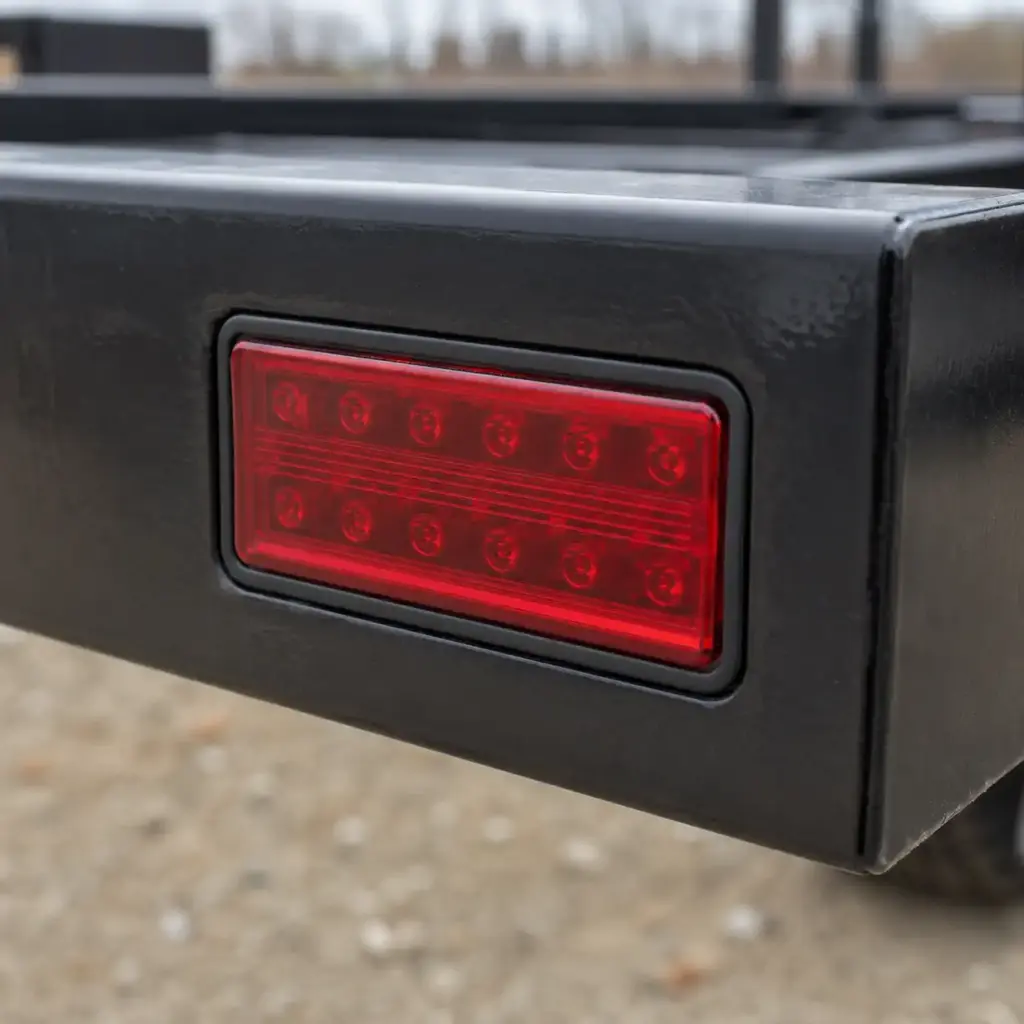
Trailer lighting is one of the most-cited violations in Michigan, partly because lights fail constantly on trailers (water gets in, grounds corrode, bulbs vibrate apart) and partly because owners simply do not check them. The legal requirements:
- Two red tail lamps on the rear, visible from at least 500 feet.
- Two red stop lamps (brake lights) on the rear, working in conjunction with the tow vehicle’s brake pedal.
- Turn signals on the rear, synchronized with the tow vehicle.
- License plate illumination at night, as above.
- Side marker lights and reflectors on trailers over a certain length and width, per federal FMVSS 108 standards, which Michigan adopts.
- Clearance lights on wider trailers, to show the outer edges.
The honest practical advice: if your trailer is still running incandescent bulbs, upgrade to LED the first chance you get. LEDs draw less power, last years longer, are far more resistant to vibration, and most importantly, are sealed against water intrusion. The number one cause of trailer light failure in Michigan is water getting into a non-sealed housing during winter or after a rainstorm and corroding the ground. Sealed LED housings effectively eliminate that failure mode. We install complete LED kits using TecNiq commercial-grade lights for customers across Genesee County who are tired of chasing electrical gremlins every spring.
Trailer Brake Requirements in Michigan
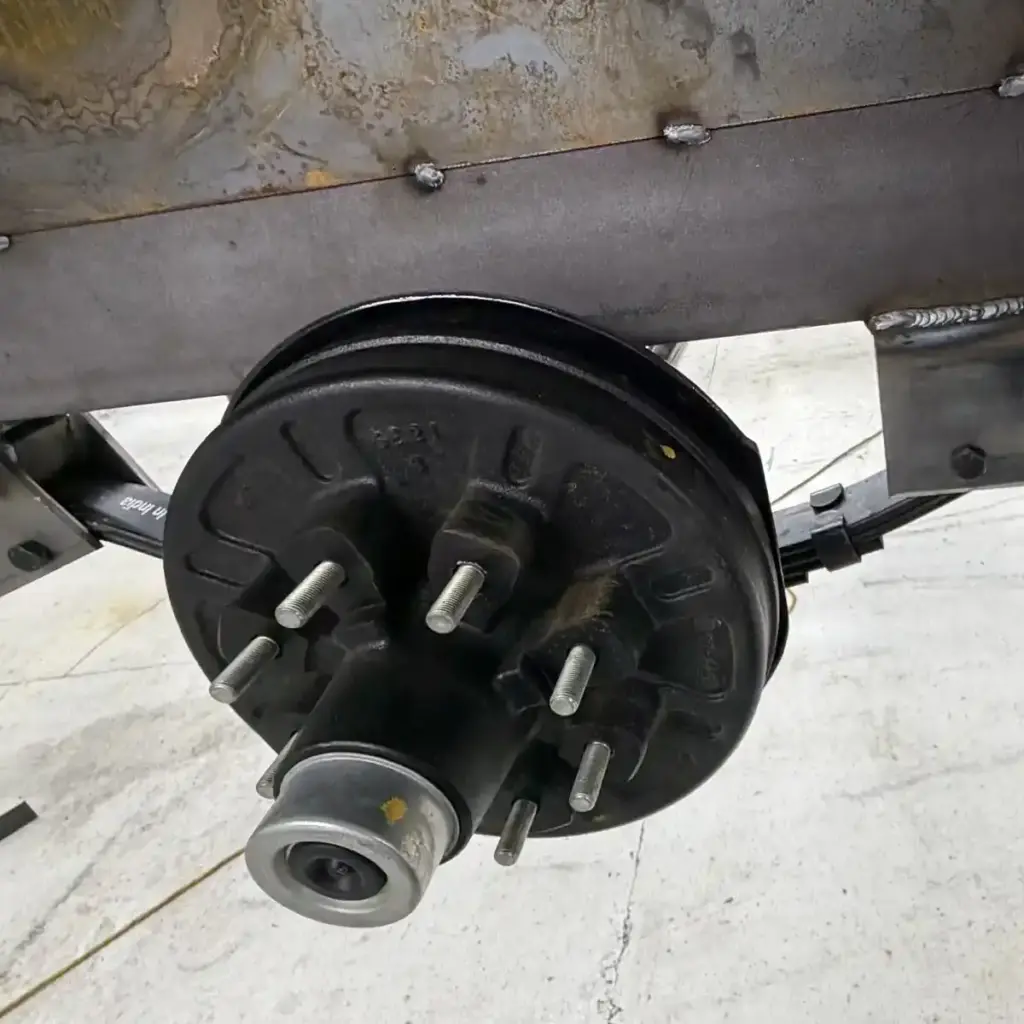
This is the rule most trailer owners are surprised by, and it is the one with the biggest safety implications.
Michigan requires brakes on any trailer with a gross vehicle weight over 3,000 lbs. Gross weight means loaded weight, not empty trailer weight, so a 2,000 lb utility trailer hauling a 2,500 lb skid steer is over the threshold and needs working brakes by law. The brakes must be able to be activated from the tow vehicle, which in practical terms means a brake controller and a properly wired 7-way plug.
If you own a heavier utility, equipment, or boat trailer and the brakes have not been serviced in years, they are very likely not working at full capacity even if the controller registers them. Brake shoes wear, magnets degrade, drums score, and water gets into the actuator. We see brake failures on Michigan trailers constantly, and most of them were preventable with a basic service. Brake function is part of our free trailer safety inspection.
A second related rule: a breakaway brake system is required on trailers over 3,000 lbs gross weight. This is the safety device that automatically applies the trailer brakes if the trailer separates from the tow vehicle. It runs off a small dedicated battery and a lanyard. If the lanyard is not attached to the tow vehicle, or the battery is dead, the system does not work. Check it before every haul.
Safety Chains and Couplers
Safety chains are required on every towed trailer in Michigan. Two chains, crossed under the tongue, attached to the tow vehicle at points strong enough to hold the trailer if the coupler fails. The crossed pattern matters: it cradles the tongue if it drops, instead of letting it dig into the pavement.
Common safety chain mistakes we see in the shop:
- Chains too long, dragging on the pavement or letting the tongue hit the ground if it separates.
- Chains too short, restricting turning movement.
- Worn or rusted hooks that have lost capacity.
- Single chain instead of two. Not legal in Michigan.
- Chains hooked to the bumper instead of frame-rated attachment points. Bumpers tear off.
The coupler itself needs to be in good working order and matched to the ball size of the tow vehicle. A 2-inch ball in a 2-5/16 coupler will tow fine until it does not, and the failure usually happens at highway speed. The coupler latch should fully engage and lock with a pin or clip. If the latch is bent, worn, or loose, replace it. Coupler and tongue repair are routine fabrication work for us.
Weight Limits and Load Securement
Every trailer has a Gross Vehicle Weight Rating (GVWR) stamped on the manufacturer’s tag. That number is the maximum the trailer is rated to carry, loaded plus trailer weight combined. Exceeding GVWR is both illegal and dangerous. It overloads axles, bearings, brakes, and the frame itself, and it is one of the most common causes of structural trailer failures we see in our Flint shop. A 7,000 lb trailer regularly loaded to 8,000 lbs is going to crack a frame eventually. It is a matter of when.
If you do not know your trailer’s GVWR, find the manufacturer’s tag (usually on the tongue or front frame), and add up your loaded weight before you tow heavy. If you cannot find the tag because the trailer is old or homemade, our shop can help identify axle ratings and effective capacity.
Load securement is its own category. Michigan requires all loads to be properly secured so nothing can shift, fall off, or blow out of the trailer. Tarps for loose materials, tie-downs rated for the load weight, and verified strap conditions before each trip. A loose 2×4 that comes off your trailer on I-69 and goes through the windshield of the car behind you is a multi-year legal problem.
Towing License Requirements
For most personal and small-business towing in Michigan, a standard Operator’s License (Class D) is all you need. You can tow utility trailers, boat trailers, and equipment trailers within normal weight ranges on a regular driver’s license.
A CDL (Commercial Driver’s License) is required if the combined weight of the tow vehicle and trailer exceeds 26,001 lbs, or if the trailer alone is over 10,001 lbs and is part of a combination over 26,001 lbs. For most contractors, landscapers, and apartment maintenance crews running typical utility or equipment trailers, this threshold is not hit. For fleet operators hauling heavy equipment trailers behind one-tons, it can be. When in doubt, weigh the combination.
What Happens If Your Trailer Fails Inspection or Gets Cited
Michigan does not require an annual trailer safety inspection the way some states do, but if a trooper pulls you over and finds defects, you can be cited and in some cases ordered off the road until the trailer is repaired. The typical findings:
- Lights not working
- Brakes not engaging (above the 3,000 lb threshold)
- Worn or missing safety chains
- Expired registration or missing plate
- Visible frame cracks or structural damage
- Overloaded trailer (caught at a scale or by visual judgment)
- Unsecured load
The smart move is to not get there in the first place. Walk the trailer before every haul: lights, chains, coupler, tires, brake check. Once a year, get a deeper look at the bearings, brakes, frame, and wiring. We offer a free multi-point trailer safety inspection at our Flint shop. If everything checks out you are on your way. If we find something, we tell you exactly what it is and what it costs to fix. No pressure either way. Customers come in from Lapeer, Owosso, Fenton, Linden, Holly, Davison, Swartz Creek, and Grand Blanc.
For a deeper checklist you can run yourself before hooking up, our spring trailer inspection checklist covers the full walkaround. If you have already found a problem, our posts on boat trailer frame repair and trailer spindle replacement show how we handle the most common repairs.
Rules That Apply Specifically to Business and Fleet Owners
If you own a business that uses trailers, contractor, landscaper, apartment maintenance, small fleet, a few additional considerations apply.
Commercial registration is required for trailers used for hire or as part of a business operation. The plate type is different and the fee structure can vary. Michigan also offers intrastate gross vehicle weight plates for commercial use on 3-, 6-, or 12-month bases, which can save money for seasonal operations.
DOT numbers and USDOT compliance kick in for vehicles used in interstate commerce above certain weight thresholds. Most small Michigan businesses operating intrastate are exempt from federal DOT rules, but local plumbing, electrical, HVAC, and landscaping outfits hauling tools and materials across state lines should verify their status with FMCSA.
Insurance is the part most business owners get wrong. A trailer used for business is typically not covered by personal auto policies the way a recreational trailer is. If you are running trailers for work, talk to your commercial insurance carrier about specific trailer coverage. A frame failure that damages someone else’s property, or worse, will not be covered by a personal policy.
DIY vs. Call the Shop: Honest Assessment
Some trailer work is genuinely a Saturday job with a wrench and a few parts. Other work is one bad weld away from a real problem on the highway. Here is the honest version of which is which, even though half of it costs us money to say:
Do it yourself
- Bulb replacement on incandescent lights
- Cleaning a corroded ground connection
- Checking and adjusting tire pressure
- Hitch ball swaps and torque checks
- Lug nut torque, bearing grease checks (cap-off inspection only)
- Washing salt off the frame after winter
Call the shop
- Any structural welding, frame, tongue, crossmember, hangers
- Axle work, bent axle straightening, spindle replacement
- Brake rebuilds, shoe and magnet replacement, drum inspection
- Full rewires or persistent electrical gremlins
- Bearing repacks (done wrong, this is how you lose a wheel)
- Anything you would not stake your reputation on if something failed at 65 mph
The rule of thumb: if a failure would be dangerous, expensive, or both, it belongs with someone whose welds are AWS certified and whose tools are right. If it is maintenance you can verify with your own eyes, save the money and do it yourself.
When in Doubt, Bring It By
The most common reason we see trailers in our shop is not because something is broken yet. It is because the owner had a feeling something was off and wanted a second set of eyes before towing heavy. That is the right instinct. A 15-minute walkaround at our shop can catch a worn bearing, a hairline frame crack, or a corroded ground that would have stranded you on US-23.
We are at 2110 Lapeer Road in Flint. The free safety inspection has no obligation. If you tow a trailer in Michigan, you should not be guessing whether it is safe and legal. Come find out.
Free Trailer Safety Inspection
No charge, no obligation. We check brakes, lights, bearings, frame, coupler, and safety chains. Serving Flint, Lapeer, Fenton, Linden, Owosso, Holly, and the surrounding area.
Schedule Your InspectionYes. Michigan requires all trailers used on public roads to be registered with the Secretary of State, with narrow exceptions for implements of husbandry, special mobile equipment, and federal vehicles. Trailers over 2,500 lbs also require a title.
Michigan requires working brakes on any trailer with a gross vehicle weight over 3,000 lbs. Gross weight means loaded weight, not empty trailer weight. A breakaway brake system is also required at the same threshold.
Yes. Two safety chains crossed under the tongue and attached to frame-rated points on the tow vehicle. Single chains and chains hooked to the bumper are not compliant.
For most personal and small-business towing, no. A standard Class D Operator’s License is sufficient. A CDL is required if the combined weight of the tow vehicle and trailer exceeds 26,001 lbs, or if the trailer alone is over 10,001 lbs and part of a combination over 26,001 lbs.
Two red tail lamps, two red brake lamps, turn signals synchronized with the tow vehicle, license plate illumination, and side marker lights and reflectors on trailers over the federal length and width thresholds. LED lights are not required by law but solve nearly every common trailer light failure.
Yes. We see customers from across Mid-Michigan including Lapeer, Owosso, Fenton, Linden, Holly, Davison, Swartz Creek, and Grand Blanc. The free safety inspection is available to anyone willing to bring the trailer to our shop at 2110 Lapeer Road in Flint.
Michigan’s trailer laws are not designed to be a trap, they are designed to keep heavy steel and the people around it safe. The trailer that hauls your boat to the lake every summer or your skid steer to a job site every Monday is also a 3,000 pound projectile if something fails on the highway. Knowing the rules, maintaining the equipment, and getting a second set of eyes on it once a year is the cheapest insurance policy you will ever buy.
